
Treatment options
Invisalign for teens: is it right for your teen?
Invisalign for teens, explained by a Bakersfield orthodontist: who it suits, how wear tracking works, school and sports tips, and when braces fit better.
Read more
Blog
Lingual braces sit behind your teeth, out of sight. Learn how they work, how speech adjusts, who suits them, and what to ask a Bakersfield orthodontist.
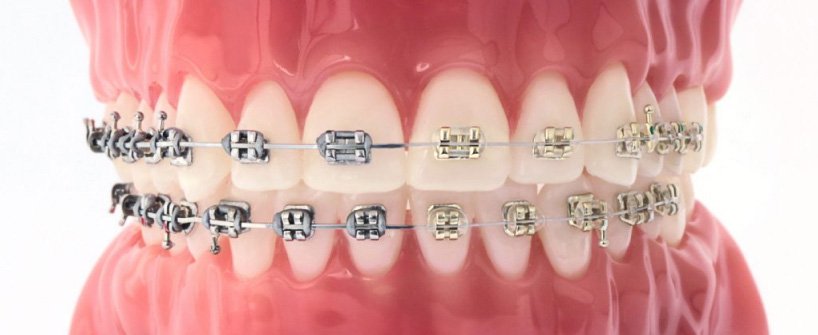
Lingual braces are braces bonded to the back surface of your teeth, the side facing your tongue, instead of the front. They work the same way traditional braces do, with brackets and a wire that guide teeth into place, but from the outside nobody can see them. The trade-off is a real adjustment period: your tongue has new hardware to get used to, speech can sound slightly different at first, and cleaning takes more care.
If you have been searching for "braces behind teeth" or "invisible braces near me" in Bakersfield, this guide covers how lingual braces work, what the first weeks feel like, who tends to be a good fit, and how they compare with Invisalign and front-of-tooth braces.
The word "lingual" simply means "relating to the tongue." The American Association of Orthodontists describes lingual braces as mounted on the back sides of the teeth. Each tooth gets a small bracket, and a thin archwire (the wire that connects the brackets) applies gentle, steady pressure. That pressure is what moves teeth, the same biology we walk through in our guide to how braces move teeth.
So the mechanics are not different. What changes is the geography. The back surfaces of teeth are shaped differently from the fronts, and the space is tighter, so lingual brackets are made to fit that surface. This is also why lingual treatment calls for an orthodontist who is comfortable with the technique. Our lingual braces page lays out how we approach it.
From the front, yes. Someone talking with you across a table will not see brackets, because the hardware sits behind your teeth. You will be aware of it, though, and so will anyone who sees you laugh with your head tipped back or who looks closely in photos taken from below.
Compare that with aesthetic braces, where clear brackets blend in but are still on the front surface, and with Invisalign, where removable clear trays do the work. Each of the three solves a different problem, and which one fits depends on your bite, not just your preference.
Usually, for a short while. Your tongue spends all day touching the backs of your teeth, so new brackets there change how certain sounds form, especially "s," "t," and "th." The Invisalign website's overview of lingual braces notes a temporary lisp as one of the main drawbacks, and general orthodontic sources describe it as strongest in the first week or two before the tongue adapts.
Some practical ways to shorten the learning curve:
If your speech has not settled the way you expected, tell your orthodontist. There are often small adjustments that help.
Soreness from pressure feels similar to any braces: a dull ache in the first few days after bonding and after adjustments. What differs is where the irritation shows up. With front braces, the lips and cheeks take the rubbing. With lingual braces, the tongue does, and the tongue can feel sore, tender, or briefly scraped until it toughens up.
Orthodontic wax can cover a bracket that rubs, and warm salt-water rinses can soothe the area. Soft foods help in the early days, as our first week with braces guide explains. If a spot stays raw or a wire pokes, call the office rather than waiting it out.
This is a question for an exam, not an article, but there are general patterns. Lingual braces tend to appeal to:
On the other side, a deep overbite (where the upper front teeth cover much of the lower ones) can be harder to manage with lingual hardware, because the lower teeth may bite down on it. Our guide to overbites, underbites, and crossbites explains the terms. Whether lingual braces suit a particular bite is something an orthodontist confirms with a full exam and records, not something to decide from a website.
It is worth saying plainly, because a clear picture beats a surprise:
None of these make lingual braces a poor choice. They make them a considered one.
Think of the three as answers to three different questions.
Traditional or aesthetic braces are the most flexible: they handle simple and complex bites, and they are fixed in place, so treatment does not depend on how many hours a day you wear anything. Appearance is the cost.
Invisalign is removable and nearly clear. It suits many cases and asks for discipline, since aligners work only while they are in your mouth. We are a certified Invisalign and Invisalign Teen provider, and our Invisalign vs. braces comparison goes deeper.
Lingual braces combine the fixed, always-working nature of braces with an appearance of nothing at all, in exchange for the adjustment and the cleaning effort described above.
Neither is "best." The better question is which fits your bite and your life.
Yes. Teeth have a memory, and they drift back toward old positions without support, regardless of which kind of braces moved them. Retainer wear afterward is how the result lasts, and the reasons are the same as for any other braces. See retainers after braces for the full explanation.
Consider a visit if:
Dr. Mendivil has been treating patients in Bakersfield since 1989, and the practice offers lingual braces alongside traditional braces, aesthetic braces, and Invisalign, so the recommendation comes from your bite instead of from what one product can do. Treatment happens in private rooms, and our bilingual team can walk you or your family through it in English or Spanish.
If you would like to see whether lingual braces fit, you can schedule a free consultation. For general background on braces and bite correction, the American Dental Association's MouthHealthy page on braces is a good place to read first.
Keep reading
Invisalign for teens, explained by a Bakersfield orthodontist: who it suits, how wear tracking works, school and sports tips, and when braces fit better.
Read more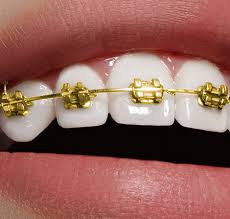
Clear braces vs. gold braces vs. metal: how each looks, holds up, and stains, plus how to choose the right bracket finish. A Bakersfield orthodontist's guide.
Read more
Overbite, underbite, crossbite and open bite explained in plain English: what each looks like, why it happens, and how Bakersfield orthodontists treat them.
Read moreTalk it through

Bring your insurance card. We will walk through the bite, the timeline, and what is covered before any treatment starts.
Schedule a consultation