Treatment options
Braces myths: 9 things people still get wrong
Braces myths, sorted from fact: pain, age, cost of waiting, retainers and who is actually an orthodontist. A plain-English guide for Bakersfield families.
Read more
Blog
How to brush and floss with braces, step by step: the right tools, a realistic routine, and what to do about white spots. From a Bakersfield orthodontist.

To brush and floss with braces, brush for two minutes at least twice a day with a soft brush and fluoride toothpaste, angling the bristles at the brackets and the gumline, then clean between the teeth once a day with waxed floss and a floss threader, an interdental brush, or a water flosser. Braces do not make teeth decay on their own. They give food and plaque more places to hide, and the routine below is how you take those hiding places away.
Here is the practical version for Bakersfield patients and parents: what to buy, what to do in what order, how long it takes, and what happens if the routine slips.
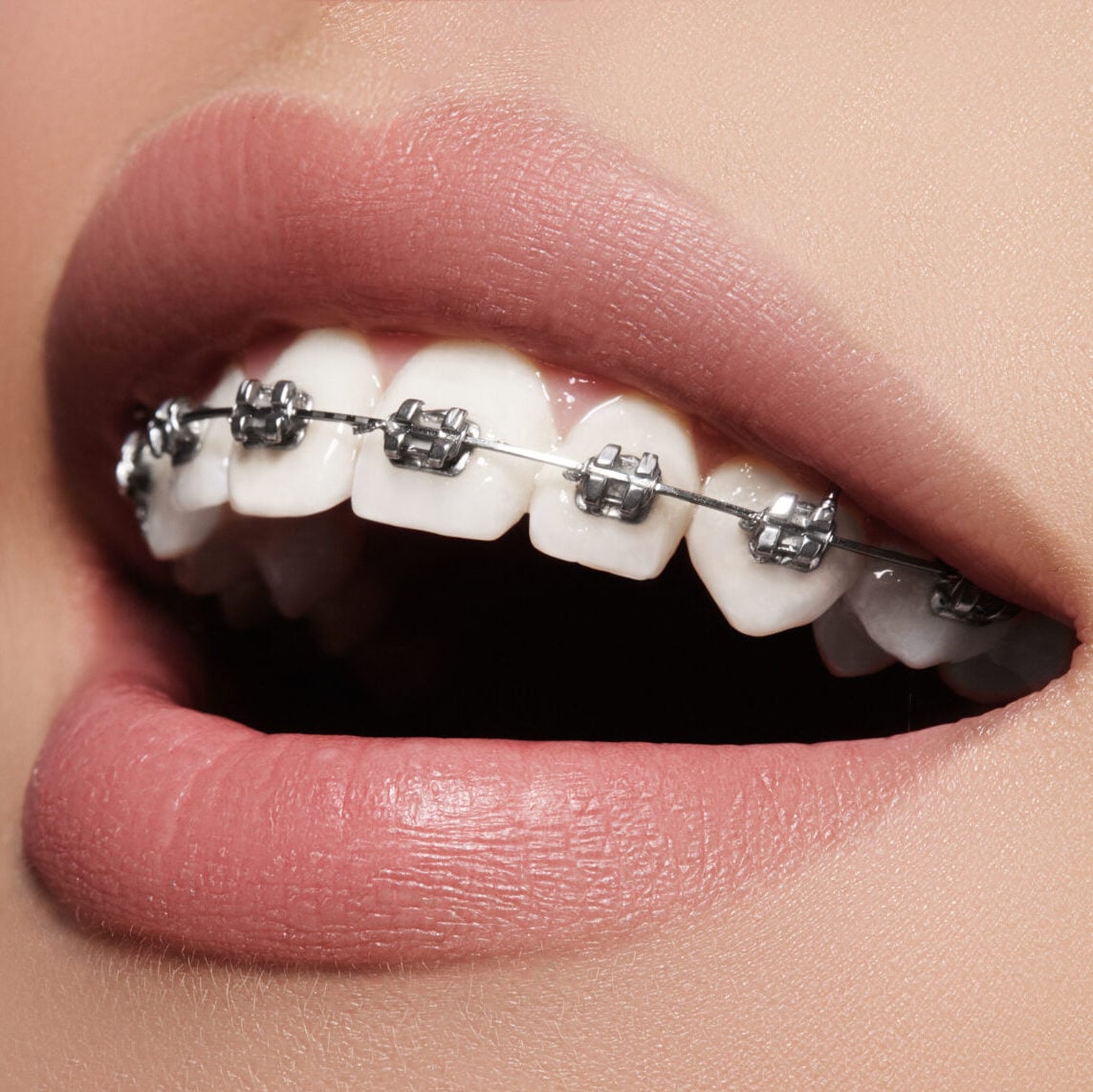
Brackets (the small attachments bonded to each tooth) and the archwire (the thin wire connecting them) create ledges and corners. Plaque, the sticky film of bacteria that forms on teeth all day, collects on those ledges and along the gumline. If it stays there, it can irritate the gums and leave marks on the enamel.
The American Dental Association's MouthHealthy site notes that limiting sugary foods and keeping a good routine matters during treatment, because plaque built up around brackets can permanently stain or damage teeth. That is the whole reason this article exists: the cleaning is not complicated, but it does need to be thorough.
The good news is that a patient who cleans well usually finishes treatment with healthy gums and clean enamel under every bracket. It is a skill, and like most skills it gets faster.
A short, boring shopping list beats a bathroom drawer full of gadgets.
Plan on about two minutes, twice a day, and think of the mouth as a few separate zones rather than one big job.
Gentle pressure is enough. Scrubbing hard does not clean better, and it can irritate gums that are already adjusting to braces.
Flossing is the step most people dread, and it is also the one that makes the biggest difference between the teeth.
Expect the first few weeks to take noticeably longer than your pre-braces routine. That is normal. Most people speed up quickly once they have done it daily for a week or two.
Both are useful, and neither is a substitute for the other. An interdental brush is very good at cleaning around brackets and under the wire. A water flosser is good at flushing out food. Floss is still the tool that cleans the tight contact between neighboring teeth. If flossing with a threader is a battle, ask us at your next adjustment which combination suits your mouth.
White spots are chalky, dull patches that sometimes show up on the enamel after the brackets come off, usually in the shape of the bracket. They are areas where minerals were pulled out of the enamel (decalcification, in clinical terms) because plaque sat on that spot for a long time.
They are a good argument for the routine above. They tend to appear when cleaning has been inconsistent around the brackets, especially near the gumline. Mild spots can fade with good home care and fluoride, and your dentist can advise on anything that persists. The better plan is prevention: clean every day, and keep up with your regular cleanings.
Cleaning is half the picture. The other half is how often sugar reaches your teeth. Sipping a sugary drink for an hour feeds plaque far longer than having one with a meal. MouthHealthy also recommends avoiding popcorn, corn on the cob, chewing gum, whole apples, and other sticky or hard foods during treatment, both for the sake of the brackets and for cleanliness.
For a practical list of what to eat while your teeth are sore, our first week with braces guide goes day by day. Water is the best default drink, and it is easy to carry in the Bakersfield heat.
The principles carry over, with different mechanics.
Keep your regular dental cleanings and checkups going during treatment. A cleaning removes the buildup that home care misses, and a dentist can catch early problems around brackets. Our practice also offers dental cleanings and preventative care alongside orthodontics, so families can handle both in the same office.
Mention it at your next visit, or call the office, if you notice any of the following:
These are normal things to ask about. Nobody at the office is grading your brushing, and early help is easier than late repair.
If you are thinking about braces for yourself or your child, or you already have them and want a second opinion on your routine, you are welcome to come in. Dr. Mendivil has treated patients in Bakersfield since 1989, and a consultation is free. You can schedule a consultation online or call the office at 661-323-5910.
Keep reading
Braces myths, sorted from fact: pain, age, cost of waiting, retainers and who is actually an orthodontist. A plain-English guide for Bakersfield families.
Read more
Does dental insurance cover braces? How orthodontic benefits, lifetime maximums, waiting periods and age limits work, and what to ask before you book.
Read more
Lingual braces sit behind your teeth, out of sight. Learn how they work, how speech adjusts, who suits them, and what to ask a Bakersfield orthodontist.
Read moreTalk it through

Bring your insurance card. We will walk through the bite, the timeline, and what is covered before any treatment starts.
Schedule a consultation