Treatment options
Braces myths: 9 things people still get wrong
Braces myths, sorted from fact: pain, age, cost of waiting, retainers and who is actually an orthodontist. A plain-English guide for Bakersfield families.
Read more
Blog
Overbite, underbite, crossbite and open bite explained in plain English: what each looks like, why it happens, and how Bakersfield orthodontists treat them.
An overbite, an underbite, and a crossbite are all bite problems, and the difference comes down to which teeth sit where when your mouth closes. In an overbite, the upper front teeth cover too much of the lower ones. In an underbite, the lower front teeth sit in front of the upper ones. In a crossbite, some upper teeth close inside the lower teeth instead of outside them.
Orthodontists call any of these a malocclusion, which simply means the teeth and jaws do not meet the way they are meant to. Below is what each one looks like, what tends to cause it, and what treatment usually involves, so you know what to ask at a consultation.
Your bite is the way your upper and lower teeth fit together. In a well-aligned bite, the upper teeth sit slightly in front of and over the lower teeth, and the back teeth meet in a stable, interlocking way. The American Dental Association's MouthHealthy site describes the goal of orthodontics as a healthy bite in which teeth meet the opposing teeth properly.
Two terms come up often in an orthodontic exam:
Some overlap is normal. A bite problem is a pattern that is outside the usual range or that affects how the teeth and jaws work. Whether it needs treatment is a decision for an exam and X-rays, not a mirror.
An overbite means the upper front teeth overlap the lower front teeth more than expected. People also use the word to describe upper teeth that stick out far forward, which an orthodontist would call increased overjet. The two often travel together.
Common contributors include:
A deep overbite can cause the lower teeth to press into the gums behind the upper teeth or wear against them. A prominent overjet also leaves the front teeth more exposed to injury, which matters for kids who play sports. Our post on braces and school sports in Bakersfield covers mouthguards in more detail.
An underbite is the reverse arrangement: the lower front teeth sit ahead of the upper front teeth when the mouth is closed. It can come from a lower jaw that is larger or further forward than the upper jaw, an upper jaw that is smaller, or a combination.
Underbites are worth checking early. The American Association of Orthodontists lists underbite among the problems that an orthodontist can often spot by age 7, and early evaluation gives the orthodontist more options while a child is still growing. It does not mean treatment starts at 7. It means someone qualified is watching.
A crossbite happens when one or more upper teeth close inside the lower teeth rather than outside them. It can involve the front teeth (an anterior crossbite) or the back teeth (a posterior crossbite), on one side or both.
Two points are worth knowing:
Because a crossbite can affect how the jaw grows and how the teeth wear, it is usually better evaluated sooner than later.
An open bite is the one people forget about. The upper and lower teeth do not touch in some area when the mouth closes. In an anterior open bite, the back teeth meet but the front teeth stay apart. In a posterior open bite, it is the other way around.
Thumb-sucking and similar habits are well-known contributors, as is the way the tongue rests or pushes. Jaw growth patterns and genetics play a part too. An open bite can make biting into certain foods awkward and, in some people, can be linked to how they swallow or speak. An orthodontist can tell you whether that applies to you.
Generally, no. Children's jaws and teeth do change as they grow, and some mild patterns improve with time, which is exactly why monitoring is useful. But established overbites, underbites, and crossbites do not usually correct on their own once the permanent teeth are in. If one looks like it is getting better or worse, that is a reason to have it watched, not a reason to wait and see indefinitely.
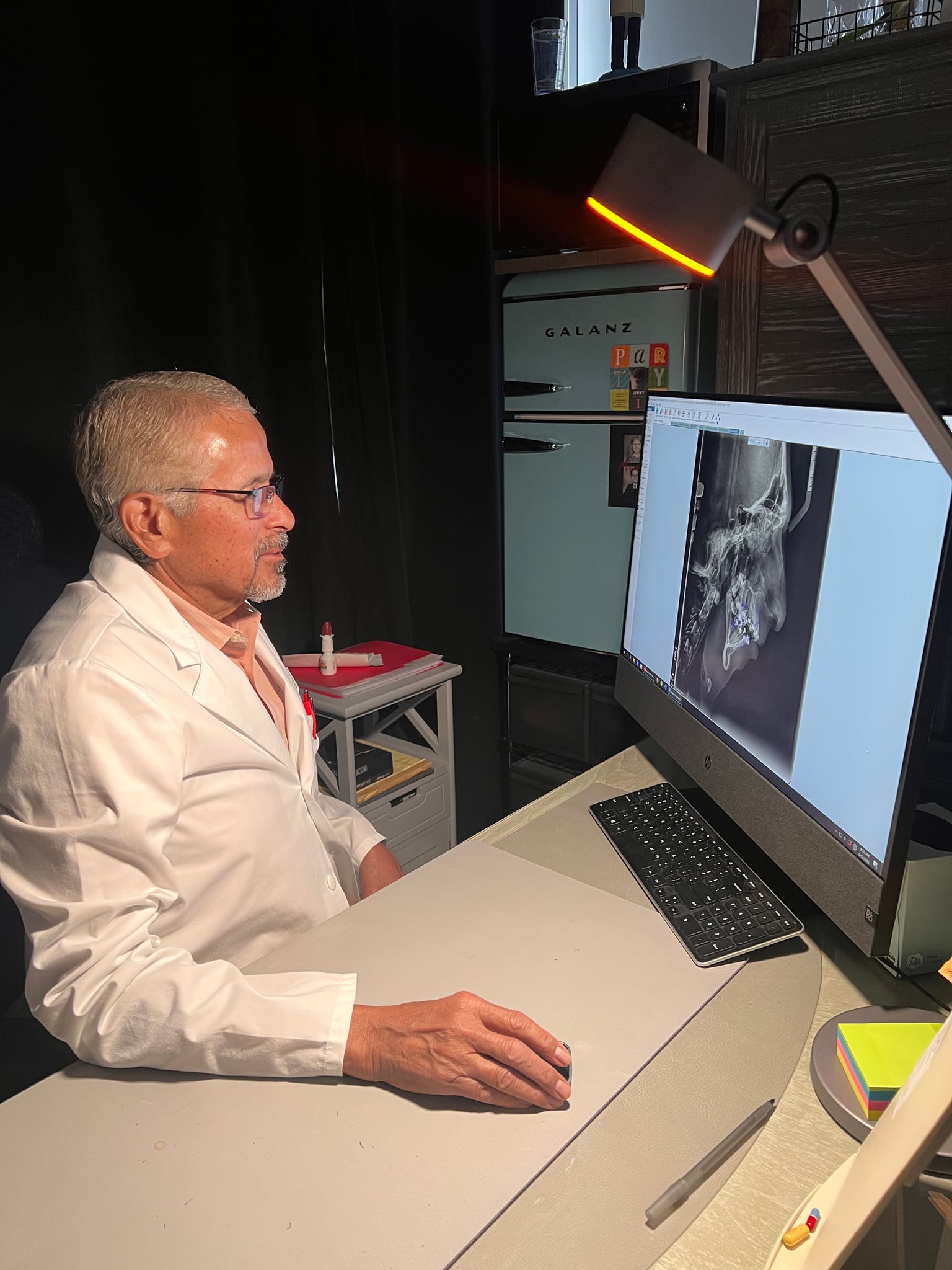
The right plan depends on the cause: teeth, jaws, or both. An orthodontist builds it from a clinical exam, X-rays, and records.
Treatment length varies with the problem. For a general idea, read how long braces take.
Not necessarily, and the relationship is not simple. Many people have an imperfect bite and no jaw trouble at all. Still, jaw clicking, soreness when chewing, or morning headaches alongside a noticeable bite problem are worth mentioning to an orthodontist. Dr. Mendivil treats roughly 40 TMJ cases a year, and our guide to TMJ symptoms lists the signs worth knowing. The practice's TMJ treatment page has more on how that care works.
Book an evaluation if you notice any of the following in yourself or your child:
Adults are not left out. Bite problems can be corrected well after the teen years; see our guide to adult braces in Bakersfield.
Dr. Mendivil has treated patients in Bakersfield since 1989, and the practice offers a free consultation where you can have your bite looked at and your questions answered. You can schedule a consultation online or call 661-323-5910. Treatment questions are also covered in our FAQ.
Keep reading
Braces myths, sorted from fact: pain, age, cost of waiting, retainers and who is actually an orthodontist. A plain-English guide for Bakersfield families.
Read more
Does dental insurance cover braces? How orthodontic benefits, lifetime maximums, waiting periods and age limits work, and what to ask before you book.
Read more
Lingual braces sit behind your teeth, out of sight. Learn how they work, how speech adjusts, who suits them, and what to ask a Bakersfield orthodontist.
Read moreTalk it through
Bring your insurance card. We will walk through the bite, the timeline, and what is covered before any treatment starts.
Schedule a consultation