Treatment options
Overbite, underbite, crossbite: what's the difference?
Overbite, underbite, crossbite and open bite explained in plain English: what each looks like, why it happens, and how Bakersfield orthodontists treat them.
Read more
Blog
Clear braces vs. gold braces vs. metal: how each looks, holds up, and stains, plus how to choose the right bracket finish. A Bakersfield orthodontist's guide.
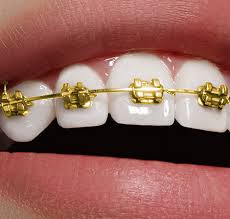
Clear braces and gold braces work the same way as traditional metal braces, so the choice between them is mostly about looks, durability, and day-to-day upkeep. Clear ceramic brackets blend with tooth enamel. Gold and rose gold brackets are metal with a warmer finish. Standard silver brackets remain the simplest option. None of the three changes how teeth move, and the bracket finish does not set how long treatment takes.
If you are comparing clear braces vs. gold braces for yourself or for a teenager, this guide covers what each one looks like, what it asks of you, and how to settle the decision without guessing.
Every fixed brace has the same parts: a small bracket bonded to each tooth, and an archwire (a thin wire) that runs through the brackets and guides the teeth. The American Association of Orthodontists describes metal braces as the traditional option and ceramic braces as the option with a near-seamless look, using tooth-colored or clear brackets.
At our practice, aesthetic braces come in three finishes:
Gold and rose gold are metal brackets with a colored finish, which makes them slightly stronger than the clear ceramic option. Traditional braces use silver metal brackets and remain a reliable choice for straightforward and complex bites alike.
No, and any honest orthodontist will say so. Clear braces are less noticeable than silver ones, but you can still see them up close. The brackets are tooth-colored or translucent, so they pick up the shade of the tooth behind them. The wire is the other visible piece, and it still reads as a line across the teeth.
Think of it as camouflage, not a disappearing act. From across a conference table, clear braces fade into the background. From a foot away in good light, they are there. If a truly hidden appliance matters most, the options to ask about are lingual braces, which sit behind the teeth, or Invisalign.
This is the question that gets the most conflicting answers online, so here is the plain version. The ceramic brackets themselves do not stain. The small elastic ties that hold the wire in place can pick up color from coffee, tea, curry, and red wine. Those ties are swapped at every adjustment visit, so any discoloration is temporary and gone within weeks.
A few habits keep clear braces looking clear:
Gold and rose gold brackets are metal, so staining is not the concern there. Their appeal is the finish itself.
Generally, metal brackets are more durable than ceramic ones. Ceramic is a harder but more brittle material, which is why the AAO notes ceramic options may not suit every patient. Gold and rose gold finishes sit on metal brackets, so they share the sturdiness of traditional braces. That matters for active kids and for anyone who tends to bite down on hard foods they were told to avoid. If you are the parent of an athlete, our post on braces and school sports covers mouthguards and game day.
None of this means clear braces are fragile in everyday use. It means that if your child is hard on things, or you want the fewest surprise visits, a metal bracket in a color you like is the lower-maintenance path.
There is no rule, but patterns show up:
Choose by how visible you want the brackets to be, not by what is expected for your age. Adults wear rose gold and teens wear clear. The right answer is whichever one you will feel fine about for the length of treatment. Our post on adult braces in Bakersfield goes further on options for grown-up smiles.
No. Treatment time depends on your bite and the movements your teeth need, not on the bracket finish. Clear, gold, rose gold, and silver braces all move teeth the same way, through steady pressure from the wire as the bone around each tooth remodels. If you want the science behind that, see how braces move teeth.
For a sense of timing, see how long braces take. The honest answer there is that a consultation and exam are what produce a real estimate.
Ask yourself three questions:
The American Dental Association's MouthHealthy site notes that braces and aligners are the appliances orthodontists most commonly use to move teeth, which is a useful reminder that both routes are well established.
We do not publish a price for each finish here, because costs depend on the case and the plan. Prices and payment options are covered at the consultation, and our financing page explains how insurance and payment plans work. For a broader look, see our guide to what braces cost in Bakersfield.
Book an exam if any of these apply:
The finish is the easy part. The first decision is whether, and how, your teeth should move, and that takes an exam and X-rays. Dr. Mendivil is a board-certified orthodontist who has practiced in Bakersfield since 1989, and treatment takes place in private rooms. Staff speak English and Spanish.
If you would like to see the brackets in person and talk through options, you can schedule a free consultation. Questions can also wait for the visit, and many answers are on our FAQ page.
Keep reading
Overbite, underbite, crossbite and open bite explained in plain English: what each looks like, why it happens, and how Bakersfield orthodontists treat them.
Read more
How to brush and floss with braces, step by step: the right tools, a realistic routine, and what to do about white spots. From a Bakersfield orthodontist.
Read more
TMJ symptoms include jaw pain, locking, headaches and ear pain. Learn which signs are harmless, which deserve an exam, and what to expect in Bakersfield.
Read moreTalk it through

Bring your insurance card. We will walk through the bite, the timeline, and what is covered before any treatment starts.
Schedule a consultation